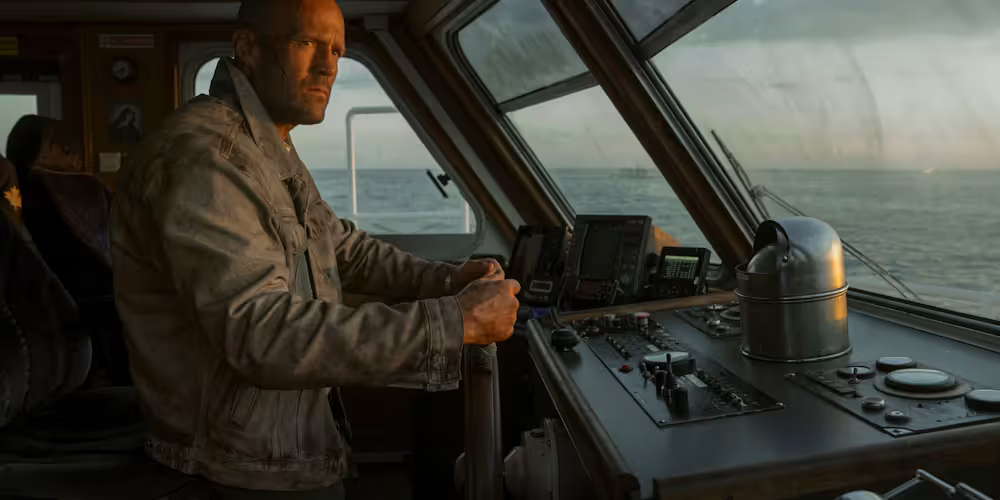
The Sint Maarten Entrepreneurship Development Center Foundation (SEDC) successfully concluded the first cohort of its fisheries training program, held from August 31 to September 5, 2026. SEDC contracted the services of Nature Foundation, with Sabrine Brismeur delivering the Introduction to Sustainable Fishing Level 1 and supported by our local fisherman, Mr. Lee Lake, conducting interactive practical sessions of the Fishery training program.
The Fishery Training forms part of a program funded by the TWO, coordinated by the Netherlands Enterprise Agency (RVO), in collaboration with the Department of Economic, Transport and Telecommunications (ETT), and implemented by SEDC. The training welcomed 20 participants and provided foundational knowledge relevant to the sustainable development of Sint Maarten’s fisheries industry and responsible fishing practices.
The Nature Foundation’s contribution strengthened the program by adding technical and environmental expertise, while Mr. Lakes shared a day in the life of one of Sint Maarten’s fishermen who runs his fishing business as a passionatefishery entrepreneur.
The Fishery welcomed 20 participants, bringing together a diverse group ranging from established fishermen to aspiring entrepreneurs interested in developing new business opportunities. Participants gained practical knowledge and sector-specific insights designed to support sustainable practices, strengthen their businesses, and encourage entrepreneurship within Sint Maarten’s fisheries industries.Interest in the program exceeded the available capacity. In response, SEDC will schedule a second cohort at a later date, giving more fishers and aspiring fisheries entrepreneurs theopportunity to participate.
Later this year, participants from both cohorts will take part in a joint practical training program focused on the sustainable use of Fish Aggregating Devices (FADs), fish handling and cold-chain management. This practical component will further strengthen participants’ understanding of fisheries-support equipment, fish handling, and cold-chain practices, while improving the quality and shelf life of locally caught fish.