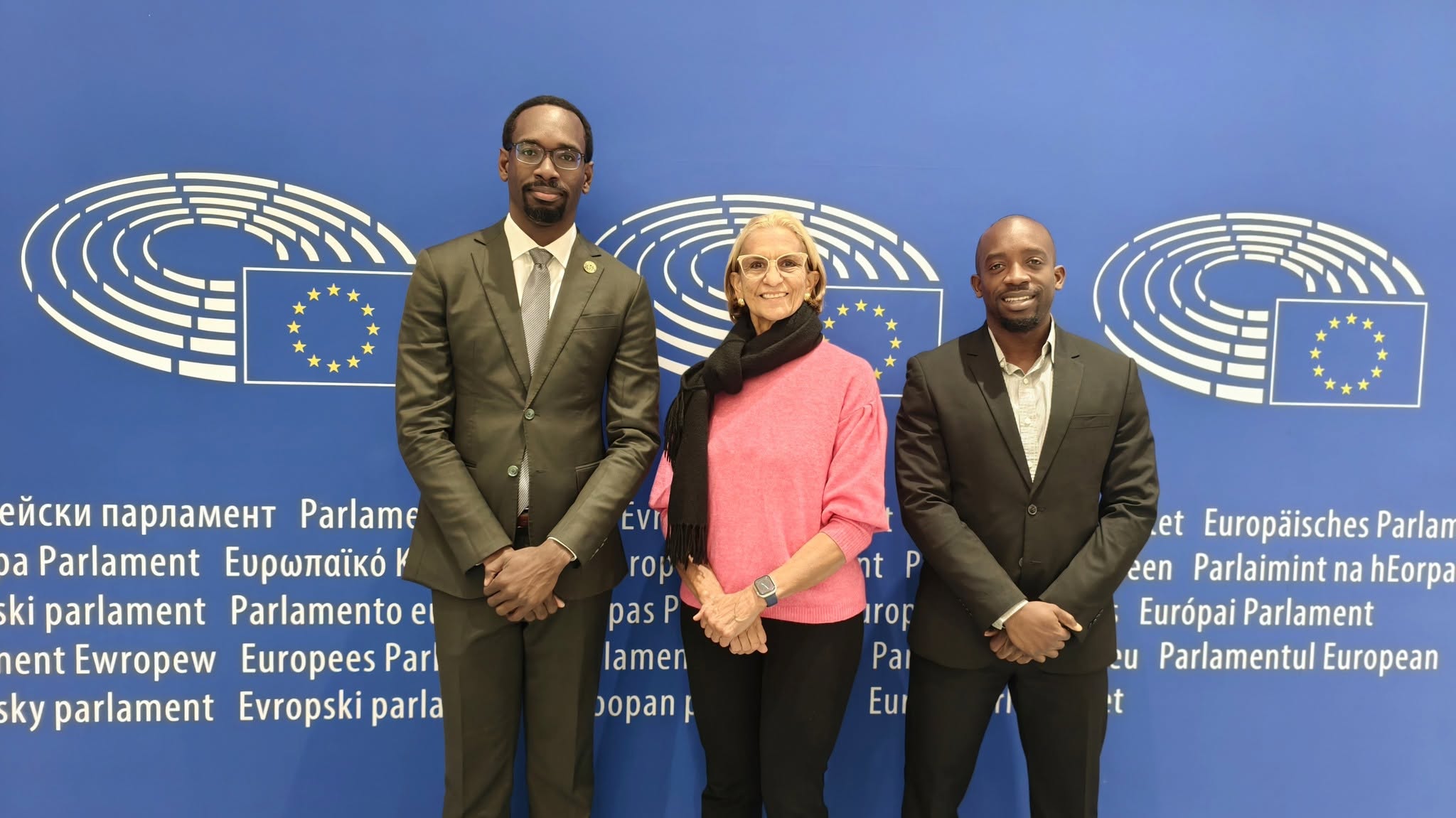
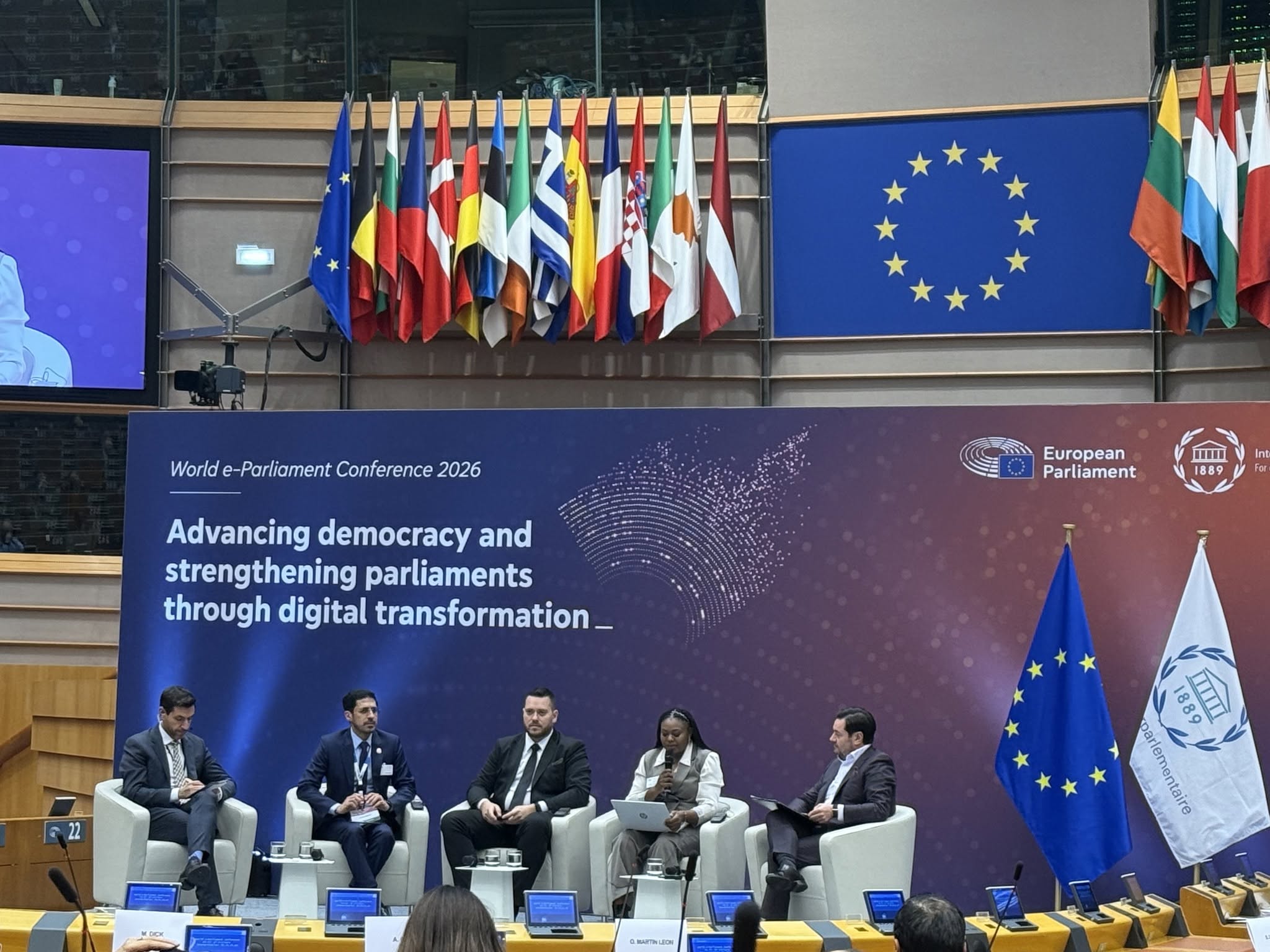
SINT MAARTEN/BELGIUM - As part of the Digital Transformation and Artificial Intelligence Workgroup of Parliament, a delegation from the Parliament of Sint Maarten participated in the World e-Parliament Conference 2026, held in Brussels, Belgium, from November 16 to 18, 2026.
The delegation consisted of the President of Parliament, the Hon. Sarah A. Wescot-Williams, Member of Parliament, the Hon. Mr. Ardwell M.R. Irion, and the Secretary General of Parliament, Mr. G.J. Richardson.
Organized by the Inter-Parliamentary Union (IPU) and the European Parliament, the World e-Parliament Conference is the leading global forum on innovation and the use of digital technologies in parliaments.
The conference brought together Members of Parliament, Secretaries General, and senior parliamentary staff from around the world to exchange experiences and explore how technology can strengthen parliamentary effectiveness, transparency, and public trust.
The conference program, which included a technical pre-conference, was structured around three complementary tracks: Parliamentarians in a Digital Society, Strategic Leadership for the Digital Transformation of Parliaments, and Technology, Implementation, and Innovation.
Through a series of presentations, discussions, and practical case studies, presented by Members of Parliament, Secretaries General, and Parliament IT Officers, participants examined both the opportunities and risks associated with artificial intelligence, digital sovereignty, cybersecurity, misinformation, digital maturity, and modern parliamentary operations.
Throughout the conference, emphasis was placed on ensuring that technological innovation enhances transparency, resilience, citizen engagement, and trust in democratic institutions while preserving democratic values.
A central theme of the conference was that digital transformation is no longer primarily a technology issue, but a governance issue. Consistent with recent IPU research, speakers stressed that parliaments wishing to remain responsive and relevant must act now.
Successful transformation begins with sound governance and leadership, followed by the effective management of data as a strategic asset, before technology itself is introduced. Participants were reminded that artificial intelligence depends on reliable data, strong cybersecurity, and responsible users. Parliaments therefore have the responsibility to use AI responsibly within their own institutions and to establish legislative frameworks that promote its responsible use across society.
The conference concluded with three clear commitments. First, Lead: strong leadership is required to make digital transformation an institutional priority and to ensure that parliaments evolve into modern, outward-facing institutions that deliver on the expectations of the people.
Second, Close the Gap: while digital maturity is increasing across the world, the distance between the most advanced and least advanced parliaments is also widening. Parliaments, Governments, and international partners are urged to invest in continuous digital and AI literacy for Members and staff, as well as the governance structures, skills, and infrastructure needed to adopt AI safely and confidently.
Third, Work Together: no parliament needs to face the challenges of the digital era alone. International cooperation, knowledge-sharing, and the adaptation of successful solutions developed elsewhere can significantly accelerate progress.
Important for Sint Maarten, in line with the work of the local Workgroup, was the reaffirmation that small legislatures do not need to pursue large-scale transformation projects immediately; instead, they can achieve meaningful progress by adopting practical, phased digital solutions, leveraging partnerships, and learning from peer institutions facing similar constraints.
The World e-Parliament Conference provided the platform for sharing experiences, building relationships, and identifying practical solutions that can support the continued modernization of the Parliament of Sint Maarten.