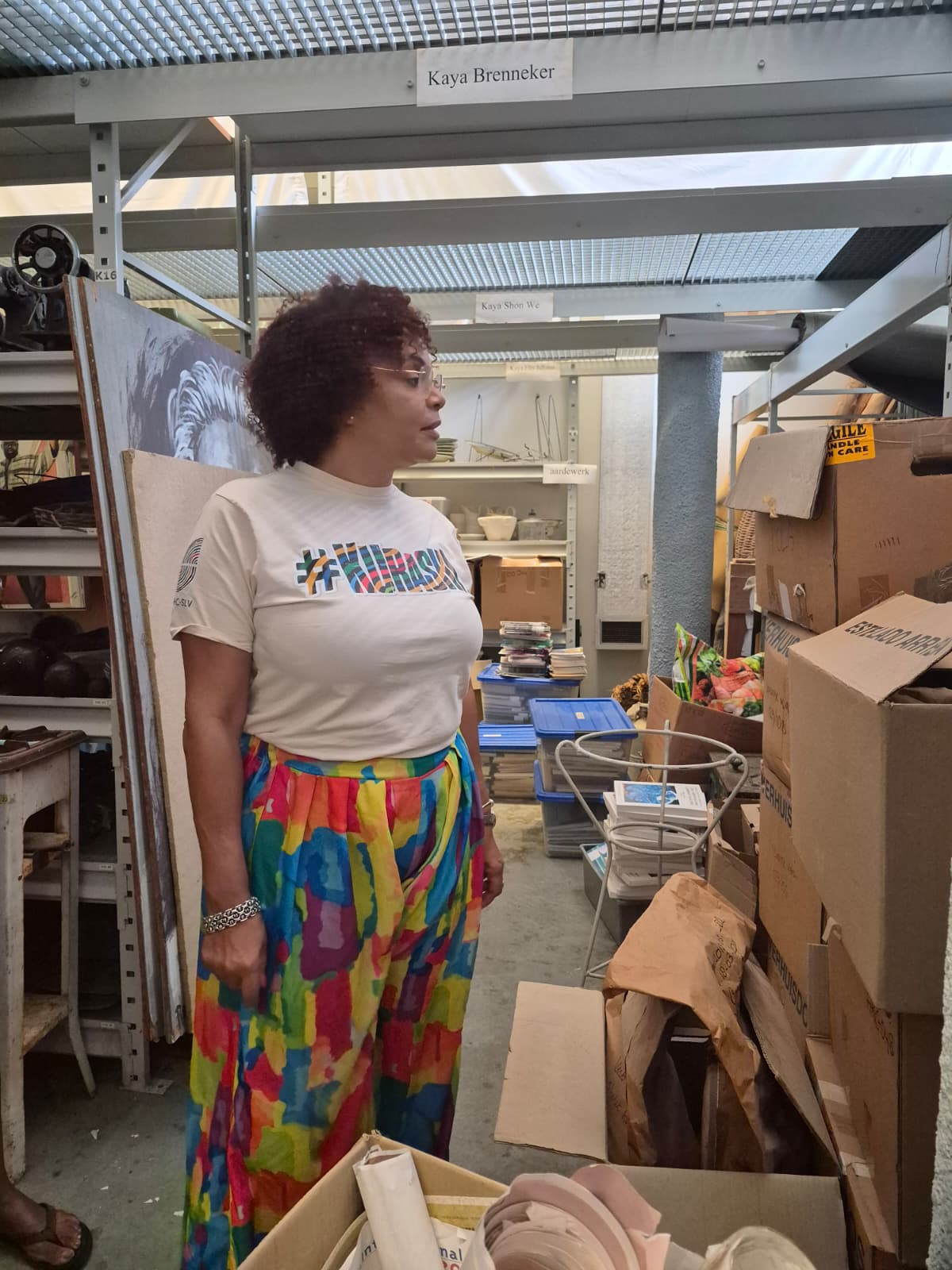
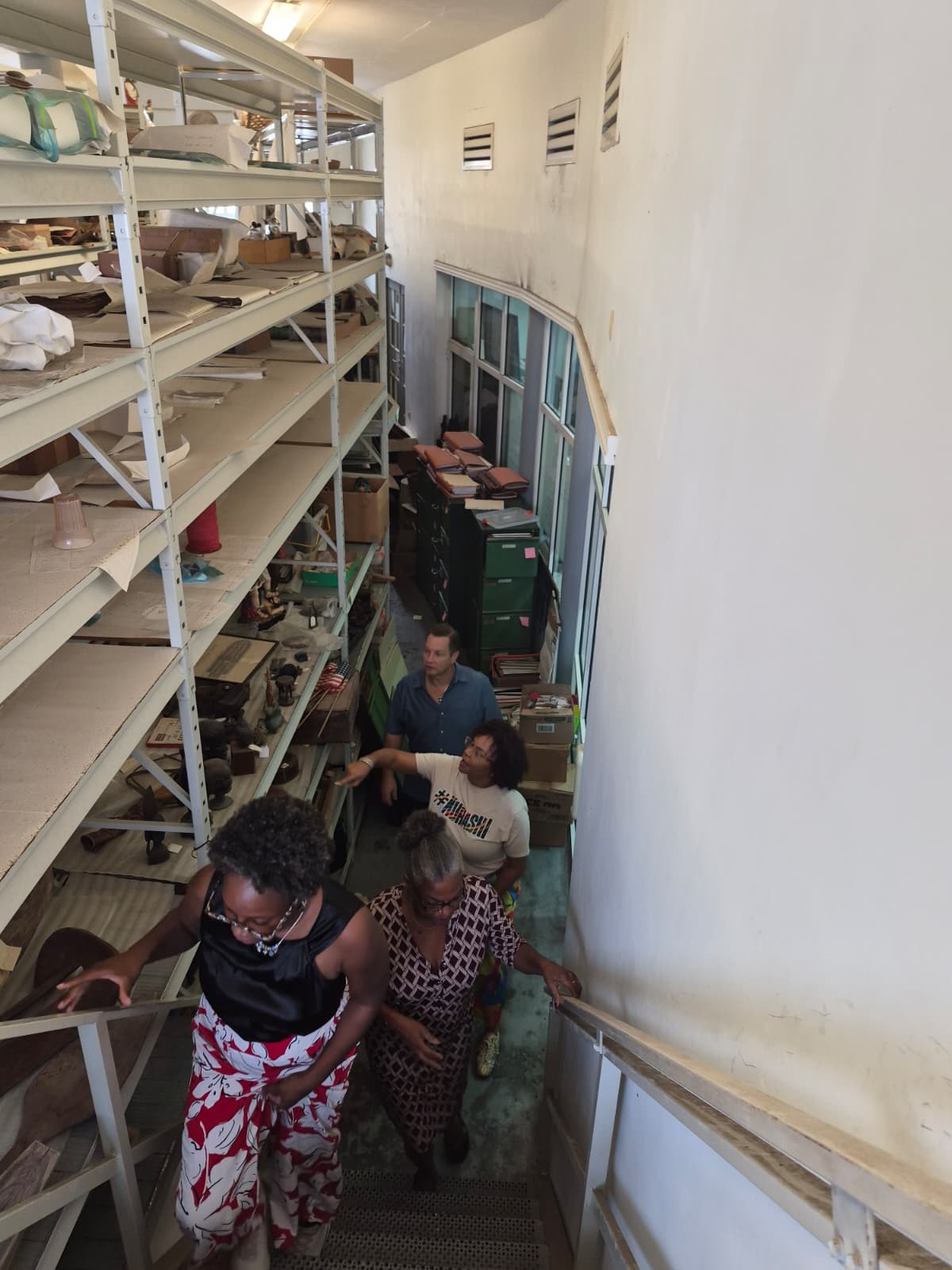
SINT MAARTEN (GREAT BAY) - On Friday, October 16th, the Slavery Memorial Committee and the NAAM Foundation (National Archaeological Anthropological Memory Management) signed a framework agreement for cooperation through 2029. The organizations are bringing together their expertise to deepen knowledge about the history of slavery, preserve valuable collections and make Caribbean heritage more accessible to a wide audience within the Kingdom.
On behalf of the Slavery Memorial Committee, Lucia Beck-Fox, director for the Caribbean part of the Kingdom, signed the agreement. Director Dimitri Cloose signed on behalf of NAAM.
The partnership builds on the knowledge, collections and perspectives of the Caribbean part of the Kingdom. By connecting the six islands, Caribbean voices and heritage are given a firmer place within the shared narrative regarding the history of slavery. Research, education, and public engagement activities are linked to careful stewardship, ensuring that resources and results are preserved and remain accessible to communities, researchers, educational institutions, and the public.
Four interconnected initiatives
The partnership centers on four initiatives. The first focuses on compiling an inventory of existing publications and research on the history of slavery on all six islands: Aruba, Bonaire, Curaçao, Saba, Sint Eustatius and Sint Maarten. This will identify what knowledge is already available, which subjects remain underexplored and which perspectives are missing. The findings will inform a research agenda, with particular attention to local knowledge and Caribbean perspectives.
The second initiative is ‘100 Aña Ompi Elis’ - a program celebrating the centenary of Elis Juliana in 2027. His work in language, poetry, art, history and folk culture will provide the basis for publications, educational materials, public activities and a travelling exhibition throughout the Kingdom. The program will introduce new generations and a wider audience to his contribution to documenting and passing on Afro-Caribbean heritage.
The partnership also aims to develop a collection, digital map and knowledge bank of the Slavery Memorial Committee. These will bring together the results of projects on the six islands, funded by Committee and make them easier to find. Examples include research, publications, audiovisual productions and artworks. Careful documentation and preservation will ensure that the knowledge generated remains available for future use. Moreover, the digital foundation provides scope for subsequently connecting relevant institutions and collections from the Netherlands.
The fourth initiative is a pilot project to make the Zikinzá collection accessible. This collection comprises approximately 1,400 audio recordings made by Elis Juliana and Paul Brenneker from the 1950’s onwards. The stories and songs contain valuable knowledge about language, everyday life, slavery, resistance and resilience. Special attention is given to Guene and archaic Papiamentu words, which require specialized linguistic research and careful interpretation. A selection of recordings is being used to explore how this material can be responsibly transcribed, contextualized, and shared with the public.
Lasting value for the islands and the entire Kingdom
The Slavery Memorial Committee contributes thematic priorities, resources and networks. NAAM is responsible for developing and carrying out the agreed activities, ensuring quality and managing the resulting materials as agreed. The initiatives will be developed in phases, with both organizations agreeing in advance on activities, schedules and funding for each project or phase.
Through this collaboration, the Slavery Memorial Committee and NAAM are fostering ongoing knowledge sharing within the Kingdom, starting from the Caribbean. This ensures that the stories, knowledge, and heritage of the islands are preserved, makes resources accessible beyond the islands' borders, and gives Caribbean perspectives a more prominent role in research, education, and public awareness.